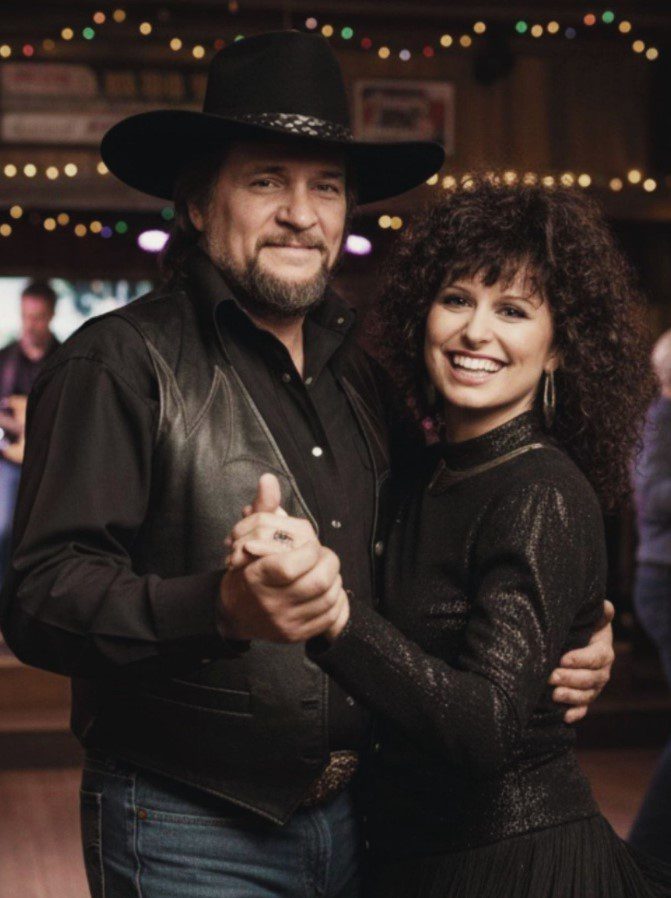
The Rise of a Rebel in Country Music
In 1974, country music experienced a seismic shift that would forever alter its landscape. The once-polished Nashville sound, characterized by smooth orchestration, background choruses, and meticulous production, began to give way to a rawer, more authentic form of expression. At the forefront of this transformation stood Waylon Jennings, a figure whose musical vision and personal defiance challenged the very foundations of the industry. Jennings embodied a new era, one in which artistry and individuality were paramount, and conformity was rejected.
The Decline of the Nashville Sound
For years, Nashville’s clean-cut sound dominated airwaves, presenting a sanitized version of country music that prioritized commercial appeal over emotional truth. Artists were expected to adhere to strict production standards, delivering performances that were polished but often lacking in soul. By the early 1970s, a growing number of musicians, led by Waylon Jennings, grew increasingly frustrated with this rigid framework. They sought to reclaim creative control, pushing for music that reflected their lives, struggles, and genuine experiences.
Waylon Jennings: The Icon of Authenticity
Waylon Jennings’ rebellion was not merely musical; it was deeply personal. His life, marked by substance battles, relentless touring, and the pressures of fame, infused his music with an unparalleled intensity. Songs such as “This Time” and “Good Hearted Woman” exemplified a gritty realism that contrasted sharply with the polished narratives of mainstream country. Jennings’ insistence on producing music on his terms inspired a generation of artists to challenge Nashville’s corporate control, ultimately giving rise to the Outlaw Country movement.
The Birth of Outlaw Country
The Outlaw Country movement, spearheaded by Jennings alongside contemporaries like Willie Nelson and Kris Kristofferson, represented a seismic cultural shift. It embraced musical freedom, emotional honesty, and storytelling rooted in lived experience. Traditional conventions were discarded; pedal steel guitars and string sections gave way to raw, guitar-driven arrangements and unfiltered lyrics. This movement resonated with audiences seeking authenticity, allowing Waylon and his peers to dominate charts while reshaping the public’s perception of country music.
Legacy and Influence
Waylon Jennings’ influence extends far beyond his era. By defying Nashville’s constraints, he redefined what country music could represent, paving the way for countless artists to pursue creative independence. His legacy is one of resilience, rebellion, and unwavering commitment to truth in music. The 1974 revolution not only transformed the genre but also cemented Waylon Jennings as an icon of authenticity whose impact remains evident in modern country and Americana music.
Waylon Jennings’ journey in 1974 remains a testament to the power of artistic courage. Through his defiance, he ignited a cultural and musical revolution, proving that true country music thrives not in conformity but in honesty, grit, and unapologetic individuality.